Richard Fleming, ‘The Prayer’


I remember the cold, high-ceilinged room
where they had laid him, the smell of incense,
brass coffin handles shining in the gloom,
an aspidistra, dusty and immense.

To this small boy dressed in a mourning suit,
he seemed reduced, much less than he once was:
his scalp, without his cap, bald as a coot,
his fingers criss-crossed on his chest like claws.

I thought back to the day we watched geese rise
high over wetlands blurred with morning haze,
the laughter always dancing in his eyes,
his warm, familiar smell, his turn of phrase.

Life is so short while memories are long.
We the bereaved are left with words unsaid.
At the day’s end, he’d sing a lulling song
as I rode his strong shoulders home to bed.

A prayer unbidden reached me on a whim:
Preserve in me the things I loved in him.

*****

Richard Fleming writes: “This is a shortened, rhyming version of a lengthy free verse poem that I wrote over thirty years ago when I relocated to Guernsey from Northern Ireland. Like many love poems, the original version, The Hidden Traveller, has stood the test of time. This version stands as a homage to its source.”

Richard Fleming is an Irish-born poet and humorist based in Guernsey, a Channel Island between Britain and France. Widely regarded as one of the island’s foremost literary voices, his versatile work blends lyricism, sharp wit, emotional depth, and a strong sense of place. Drawing from his Northern Irish roots and adopted home, his poetry and prose explore love, loss, nostalgia, identity, and modern life. Collections include Strange Journey (2012), held in the National Poetry Library, and Stone Witness (Blue Ormer) featuring the BBC-commissioned title poem. His work can be found on
Facebook https://www.facebook.com/richard.fleming.92102564/
or Bard at Bay www.redhandwriter.blogspot.com


Short poem: Daniel Brown, ‘So Large’

Big world when I was very young.
The shopping aisles a mile long …
Our lawn, though anything but wide,
Unfolding like the countryside …
The sky! So large and far away …
Exactly as it is today.

*****

Daniel Brown writes: “In his brilliant tome ‘The Poem’, Don Paterson says  “[I]f you ‘get a good idea for a poem’, I’d suggest you run a mile, as this generally isn’t the way poems make themselves known.” Advice worth attending to, though it’s also worth noting the little ‘out’ Paterson gives himself with that ‘generally’. I’m glad Robert Frost didn’t run from the powerfully suggestive idea–that “the people along the sand” are always looking out to sea, not back at the land–of his ‘Neither Out Far nor In Deep’; that W. S. Merwin didn’t run from the piercing premise–that “every year without knowing it” we pass the date of our death– of his ‘For the Anniversary of my Death’ . . . When the idea for “So Large” hit my hook, I felt like I had a big one on the line.”

“So Large” first appeared in The New Criterion under the title “A Giant.”

Daniel Brown’s poems have appeared in Poetry, Partisan Review, PN Review, Raritan, Parnassus, The New Criterion and other journals, as well as in a number of anthologies including Poetry 180 (ed. Billy Collins) and The Swallow Anthology of New American Poets (ed. David Yezzi). His work has been awarded a Pushcart prize, and his collection Taking the Occasion (Ivan R. Dee, 2008) won the New Criterion Poetry Prize. His latest collection is What More?  (Orchises Press, 2015). Brown’s criticism of poets and poetry has appeared in The Harvard Book Review, The New Criterion, PN Review, The Hopkins Review  and other journals, and the LSU Press has published his critical book, Subjects in Poetry. His Why Bach? and Bach, Beethoven, Bartok are audio-visual ebooks available at Amazon.com. His website is danielbrownpoet.com .

‘Odd Formations’, England, The Peak District, Kinder Scout Hilltop” by WanderingtheWorld (www.ChrisFord.com) is licensed under CC BY-NC 2.0.

Short poem: John Gallas, ‘Tywyn Promenade – John Longwen (1951-1971)’

A telescope stands by the railing
its eye turned out to sea
the ocean is there for a sixpence
the Lounges of Dark are free.

A little brass coin can be bought
bickering gulls on the rails
fishingboats ride in the shelters
darkness fills their sails.

John John the wind is wild
I shall keep my sixpence for sweets
strangers hide in their raincoats
rain falls on the streets.

*****

John Gallas writes: “I’ve just completed (draft 10,000, or it feels like it) a collection called ’10X10′ which includes 5 sets of 10 small, 3-verse, rhyming poems (plus 5 sets of Otherwise). This is number 3 from the ‘ffenestri’ set (10 Welsh encounters). These are poems intended to be reader-led as far as any ‘meaning’ goes, and so purposely impressionistic, wobbly and fluid – but tucked into a strict rhythm-and-rhyme form).”

John Gallas, Aotearoa/NZ poet, published mostly by Carcanet. Saxonship Poet (see www.saxonship.org), Fellow of the English Association, St Magnus Festival Orkney Poet, librettist, translator and biker. 2025 Midlands Writing Prize winner. Presently living in Markfield, Leicestershire. Website is www.johngallaspoetry.co.uk which has a featured Poem of the Month, complete book list, links and news.  

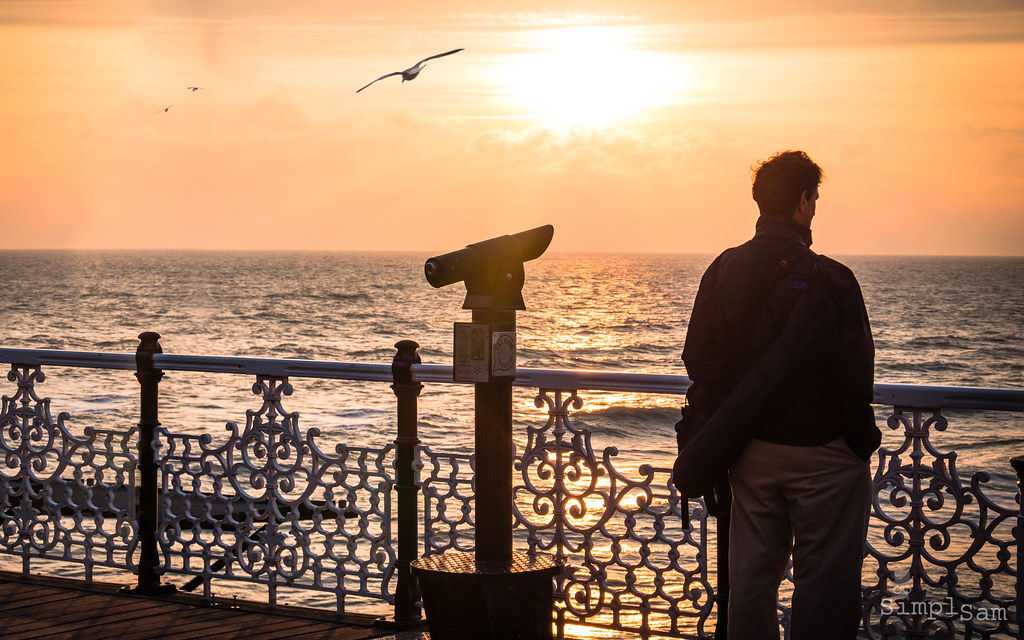
Photo: “Lost at Sea” by SimplSam is licensed under CC BY-NC-SA 2.0.

Barbara Loots, ‘A Note to my Old Age’

By now you shall have counted out my fears
on many fingers, and I count them, too,
because I know I am already you
remembering myself from your old years.

How loved you were: your hands, your heavy breasts,
your laughter, and the secret talk of eyes,
the vivid mouth, the spreading lap of thighs
(beloved woman, warm and fully blessed

whose laughter lined our face with troughs for tears!)
I write this down in order to prepare
a kind of perfume for your sallow hair,
a kiss, a love song for your wrinkled ears.

*****

Barbara Loots writes: “Following a form of Yeats (“When you are old and gray and full of sleep…”) I wrote this note to myself in my 30s. Now closing in on my 80s, I feel not in the least wistful or decrepit, still waiting for that imagined “old age”. With the perspective of some fifty years, I can say that old age is not at all as dismal as this poem would suggest. For one thing, my hair turned a rather dazzling white. And love faileth not.”

After decades of publishing her poems, Barbara Loots has laurels to rest on, but keeps climbing.  The recent gathering at Poetry by the Sea in Connecticut inspired fresh enthusiasm. Residing in Kansas City, Missouri, Barbara and her husband Bill Dickinson are pleased to welcome into the household a charming tuxedo kitty named Miss Jane Austen, in honor of the 250th birthday year of that immortal. She has new work coming in The Lyric, in the anthology The Shining Years II, and elsewhere. She serves as the Review editor for Light Poetry Magazine (see the Guidelines at  lightpoetrymagazine.com)

Sonnet: Martin Elster, ‘Axis Denied’

Earth, always the same distance from her star,
induced no crane to migrate, lark to sing,
chorus frog to trill, violet to spring,
nor leaves to turn. The solstice was as far
as the edge where galaxies all disappear.
The sun kept glaring down, as on that shore
where, from your tower, you chose to ignore
the thing I most desired. Wasn’t it clear?
Earth didn’t tilt. Her poles were locked in glaze,
sea level never changed, and when I walked
forever round your roost, you never talked
of waves, or even sensed the sun-launched rays
till yesterday when, with a sudden lurch,
Earth tipped and threw you off your chilly perch.

*****

Martin Elster writes: “The title “Axis Denied” works in two ways. Literally, it refers to a world without axial tilt, and therefore without seasons or change. Phonetically, “axis” echoes “access”—suggesting denied emotional entry or withheld intimacy—until a sudden shift finally breaks the stasis.”

Martin Elster, who never misses a beat, was for many years a percussionist with the Hartford Symphony Orchestra. He finds contentment in long woodland walks and writing poetry that often draws on the natural world and on scientific ideas, from animal life to larger planetary and cosmic patterns. His honors include Rhymezone’s Poetry Contest (2016) co-winner, the Thomas Gray Anniversary Poetry Competition (2014) winner, the Science Fiction Poetry Association’s Poetry Contest (2015) third place, five Pushcart Prize nominations, and a Best of the Net nomination. His latest collection is From Pawprints to Flight Paths: Animal Lives in Verse (Kelsay Books).

This poem appears in Bewildering Stories #1122. His work has also appeared in the anthology Outer Space: 100 Poems (Cambridge University Press) and in the Potcake Chapbooks Careers and Other Catastrophes, Robots and Rockets, and City! Oh City!

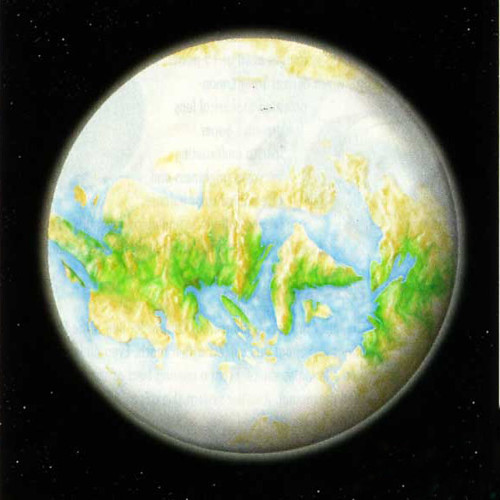
Image: “‘SNOWBALL EARTH’ – 640 million years ago” by guano is licensed under CC BY-SA 2.0.

Using form: Odd poem: British Railways toilet sign

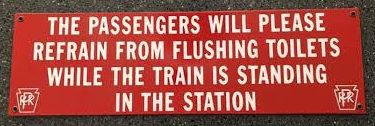
Passengers will please refrain
from flushing toilets while the train
is standing in the station.

*****

It is my (perhaps flawed) understanding that this particular wording originated in the UK. Signs instructing passengers to refrain from flushing toilets while at a station were widely used in the UK throughout the mid-20th century, specifically from the nationalization of British Railways in 1948 through the 1960s. The signs were a standard fixture in passenger carriages, typically made of cast iron or enamel for durability. The signs began to disappear as British Rail modernized its signage in 1965, and gradually replaced older rolling stock with newer models. 

At the time these signs were posted, British trains utilized a “hopper” or “direct discharge” system: toilets consisted of a simple chute or a water-flushed system that emptied human waste directly onto the railway tracks. Because waste dropped straight down, flushing while stationary at a station would deposit raw sewage directly onto the platform-side tracks, creating severe hygiene and odor issues for passengers and staff. Although the first retention tanks (which hold waste for later disposal) were introduced in 1981, the transition away from “hopper” toilets was slow. As recently as 2018, approximately 10% of British train carriages still discharged waste onto tracks, with the practice only largely being eliminated by 2023 after significant government and industry pressure. 

It is not known which railway employee successfully created and implemented the phrasing—”Passengers will please refrain from flushing toilets while the train is standing in the station”. Perhaps they did it surreptitiously, anonymously; but the catchy rhythm and rhyme became so ubiquitous that it was set to the tune of Dvořák’s Humoresque No. 7 and became a popular piece of cultural folklore in both the UK and US.

Supreme Court Justice William O. Douglas and Yale law professor Thurman Arnold take full credit for the “Bawdy Song.” In his autobiography, Go East, Young Man (pp. 171–72), Douglas notes, “Thurman and I got the idea of putting these memorable words to music, and Thurman quickly came up with the musical refrain from Humoresque.” Here is an incomplete version of that work:

“Passengers will please refrain
From flushing toilets while the train
Is in the station. Darling, I love you!
We encourage constipation
While the train is in the station
Moonlight always makes me think of you.
If the woman’s room be taken,
Never feel the least forsaken,
Never show a sign of sad defeat.
Try the men’s room in the hall,
And if some man has had the call,
He’ll courteously relinquish you his seat.
If these efforts all are vain,
Then simply break a window pane-
This novel method used by very few.
We go strolling through the park
Goosing statues in the dark,
If Sherman’s horse can take it, why can’t you?”

Susan McLean, ‘The Other Woman’

What makes you think your husband’s what I want?
Does he think that? He’s dumb as mud, if so.
To me, a man’s a fast-food restaurant,
just grab and go. Maybe that hurts to know,
but joints like that are everywhere—and packed.
It’s not a lifetime contract; it’s a meal.
I don’t do long-term. Obstinates attract.
I’m bad for him. He knows. Big fucking deal.

Nobody has a long attention span
these days. So, what do you do when you’re bored?
Binge-watch TV, drink white wine, find a man?
You want security, but feel ignored
and miss that fizz of come what may. Guess what:
we all end up alone. You think you’re not?

*****

Susan McLean writes: “This poem got its start as an entry to a sonnet contest held by the online journal Better Than Starbucks in 2019. It won the contest, appeared in the journal, and was later reprinted in Extreme Sonnets II. I like the dramatic monologue form, and once I thought of the situation, an “other woman” being confronted by the outraged wife of the man she has slept with, the voice of a woman with an attitude just came to me.

“Ironically, the poem’s content was influenced by my experience of teaching students to write essays in a college composition class. One of the subjects I typically had them write about was the obesity epidemic in America, what was causing it, and how the situation might be improved. I was surprised to learn that my students were often angry on being told that fast food might be hurting them. Many of them had been raised on it, loved it, and depended on it because it was what they could afford. They did not want to be informed of how many calories it contained or what it might be doing to their health. But the other influence on the poem was my sympathy for anyone trying to start a relationship in an era of short attention spans, instant gratification, and online dating sites. There’s a lot of loneliness out there, and not just among single people.

“Finally, for me what makes this sonnet work is the underlying humor in what is a very uncomfortable situation. The wife, who initiates the confrontation, seems to want the other woman to back off, but finds that the woman has no particular interest in the husband, and that the husband is only pursuing her because she is not interested in him. The wife is further thrown off balance when the other woman suggests that the two women have more in common than the wife may want to believe. When a clichéd situation doesn’t turn out the way you expect it to, the element of surprise contributes to the humor.”

Susan McLean has two books of poetry, The Best Disguise and The Whetstone Misses the Knife, and one book of translations of Martial, Selected Epigrams. Her poems have appeared in Light, Lighten Up Online, Measure, Able Muse, and elsewhere. She lives in Iowa City, Iowa.
https://www.pw.org/content/susan_mclean

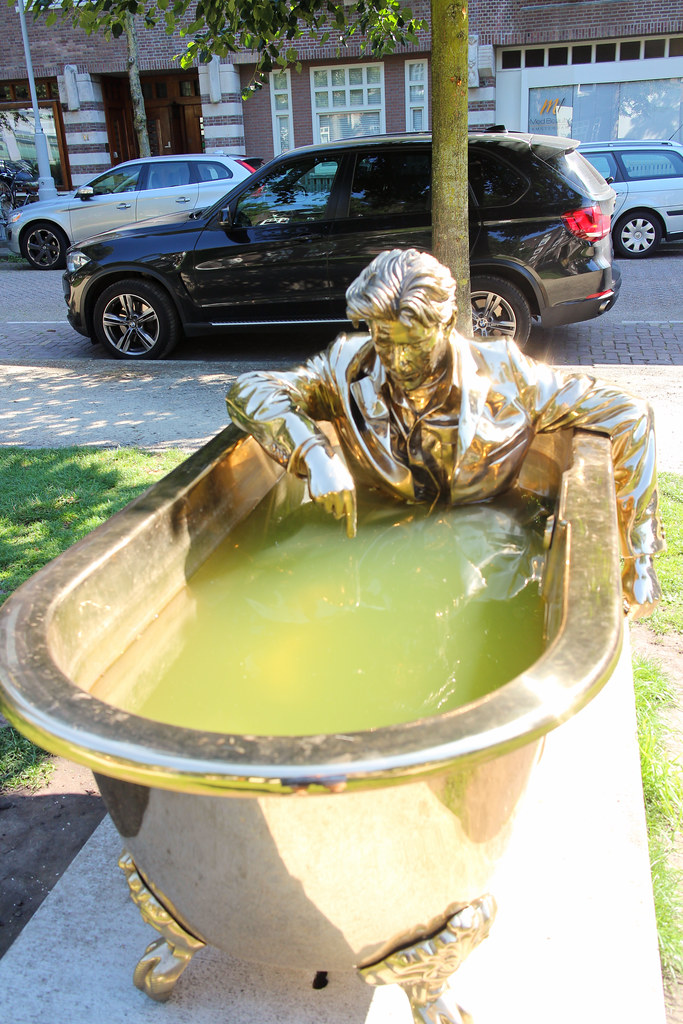
Photo: “The Other Woman” by Professor Bop is licensed under CC BY-NC-ND 2.0.

Sonnet: Amit Majmudar, ‘Homing’

My parents stacked the best years of their youth as
Bricks to build me. Taught me words I taught
Myself to shout them down with when we fought.
My parents loved me, though I could be ruthless
Hurting myself with things I poured or burned
And those who loved me with the things I said.
My parents never gloated once I learned,
Just held me through my sobs, and kissed my head.

Now, in the living room I stormed out of,
They tell me I can stay the month, or year,
Because my room will never not be here
No matter where I go, or who I love.
I am their blood, they tell me. I depart
From them as blood does from a beating heart.

*****

Amit Majmudar writes: “A homing pigeon knows where its home is by training, as the falcon knows the falconer’s arm. But there are deeper instincts at work in nature that science still struggles to explain fully, like the way birds know how to migrate by looking at the stars, and the way monarch butterflies find their way to the same vast swath of oyamel trees in Mexico every year. Human beings have something of that in them. Not just for the neighborhoods where we grew up, but for the people, the family, who were there with us. This poem is about that. I distinctly recall its writing; I woke up at the “witching hour,” as I often do, while visiting my sister-in-law’s house in Texas over Christmas break. Ten family members were asleep in the same house, and, unable to fall back asleep, I picked up my phone and found an invitation to submit to a new sonnet journal in my inbox. Immediately, still in the awoken, excited, “witching hour” state (which the Indian tradition calls the Hour of Brahma, the time of peak creativity), I wrote this poem about the bond between the far-afield child and the fixed star of family, first line to last.”

‘Homing’ was just published in The Sonneteer which can be accessed at thesonneteer@substack.com. It offers a free, partial service as well as an upgraded paid subscription.

Amit Majmudar’s recent books include Twin A: A Memoir (Slant Books, 2023), The Great Game: Essays on Poetics (Acre Books, 2024), and the hybrid work Three Metamorphoses (Orison Books, 2025). More information about his novels and poetry collections can be found at www.amitmajmudar.com.

“There are many things in life that will catch your eye, but only a few will catch your heart…pursue those.”~Michael Nolan” by katerha is licensed under CC BY 2.0.

Using form: Gwendolyn Brooks, ‘We Real Cool’

The Pool Players.
Seven at the Golden Shovel.

We real cool. We
Left school. We

Lurk late. We
Strike straight. We

Sing sin. We
Thin gin. We

Jazz June. We
Die soon.

*****

Gwendolyn Brooks was one of the greatest 20th century American poets: stylistically creative, with haunting imagery and themes, emotionally engaging, socially engaged. She wrote formal verse, free verse and loosely structured ballads – sometimes all in the same sequence, as in The Womanhood.

Appropriately, ‘We Real Cool’ is her best-known poem: simple, poignant, striking at the heart of America’s structural inequality and moral failures, and presented on the page with a bizarre twist that is both unnecessary and essential: unnecessary because the three-word lines rhyme correctly without having ‘We’ at the end… essential because the reader is forced to emphasize the ‘We’, so that the last line seems (like the youths’ lives) unnaturally shortened, prematurely ended.

A simple poem. Maybe not her greatest, but iconic.

Photo: “Pool Players” by Johnny Silvercloud is licensed under CC BY-SA 2.0.

Using form: Triolet: Susan McLean, ‘Negative Capability’

Succeeding as a poet means you know
you’re nobody. Writing your name in water,
you dissipate, dissolving in the flow.
Succeeding as a poet means you know
you’re planting rows of seedlings in the snow.
Not truth but mere oblivion is Time’s daughter.
Succeeding as a poet means you know.
You’re nobody, writing your name in water.

*****

Susan McLean writes: “This triolet, originally published in Snakeskin, is a tribute to two poets who died almost completely unknown, but who are now considered to be among the greatest poets of the English language: John Keats and Emily Dickinson. When Keats died at the age of 25, he asked that nothing be written on his gravestone except “Here lies One whose Name was writ in Water.” His friends disobeyed his instructions, adding the information “This Grave / contains all that was Mortal, / of a / YOUNG ENGLISH POET, / Who, / on his Death Bed, / in the Bitterness of his Heart, / at the Malicious Power of his Enemies, / Desired / these Words to be engraven on his Tomb Stone / Here lies One / Whose Name was writ in Water / Feb 24th 1821.” They did not include his name. Keats’s letters later made famous his phrase “negative capability,” which he defined as “capable of being in uncertainties, Mysteries, doubts without any irritable reaching after fact & reason.”

Emily Dickinson wrote at least 1775 poems, though only ten were published in her lifetime. Her poem now known as 288 (because she did not title her poems) reads:

I’m Nobody! Who are you?
Are you – Nobody – too?
Then there’s a pair of us!
Don’t tell! they’d advertise – you know!

How dreary – to be – Somebody!
How public – like a Frog –
To tell one’s name – the livelong June –
To an admiring Bog!

Both Dickinson and Keats are now very famous. But it could easily have been otherwise. Sir Francis Bacon once wrote “Truth is the daughter of time, not of authority.” I wish I could believe that a poet’s true value will always be revealed in time. What I know instead is that all poets’ works will be forgotten in time. Succeeding as a poet means that you go on writing anyway, whether or not your writing will ever be appreciated, even if you feel quite certain that it won’t. To lose yourself in the moment of creation is reward enough.

Susan McLean has two books of poetry, The Best Disguise and The Whetstone Misses the Knife, and one book of translations of Martial, Selected Epigrams. Her poems have appeared in Light, Lighten Up Online, Measure, Able Muse, and elsewhere. She lives in Iowa City, Iowa.
https://www.pw.org/content/susan_mclean

Photo: “Seven bathtubs and a man who writes on water.” by jpmm is licensed under CC BY-NC-ND 2.0.